Skip to content ↓

Year 5 News

Here you will find all about recent activity in Year 5

Page 1

  • Year 5 – What forces do we come across every day?

    Published 21/04/26
    In Science this week, we have been learning about the power of gravity and friction. Forces are seen every day all over this world. If it wasn't for the force of gravity, we would all be floating off in space – now wouldn't that be
    Read More
  • Year 5 - What has a bed, banks, a mouth and a source?

    Published 13/04/26
    A river, of course! This week we have started our new Geography topic of Rivers. We have been reminded of the key features of a river and learnt about some of the mighty rivers around the world. Did you know the longest river in the world is The Rive
    Read More
  • Year 5 - How can we use apparatus to practise balance and travelling skills?

    Published 24/03/26
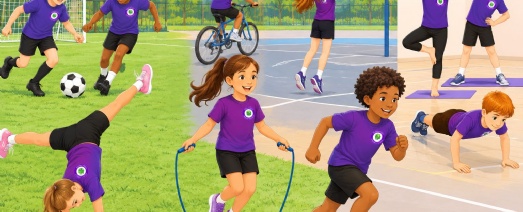
    As part of our PE lessons, Indigo Class have had a great time swimming, making all staff proud of their achievements. Sapphire and Blue classes have been learning about balances and ways of travelling using the big PE apparatus. The wall bars, t
    Read More
  • Year 5 - How often does the Moon orbit the Earth?

    Published 17/03/26
    This week we have been using a range of balls to represent the Earth, Moon and Sun to show how they are related. The Moon orbits the Earth approximately every 28 days and the Earth orbits the Sun every 365.25 days. Every four years we gain a day, whi
    Read More
  • Year 5 - What happened during the last week of Jesus' life?

    Published 10/03/26
    This past week has been a busy one in Year 5. We had a visit from the Wonderdome, where we learnt more about the solar system and planets. It was just like looking at the night sky through a telescope. Truly amazing! The next day we went to Sutton Sc
    Read More
  • Year 5 How does a compass work?

    Published 03/03/26
    In the world today we have many gadgets that can support us finding our way around. However, it can still be helpful to know how to use a compass and paper map. We have been reminded of the 8 points of the compass and how to use these with a compass.
    Read More
  • Year 5 How do you remember the names of the planets?

    Published 25/02/26
    We have had an 'out of this world' start to this term. We are continuing to read Cosmic by Frank Cottrell Boyce, which is about a group of children that get stuck in space. In Science, we are learning about our solar system. This week we lear
    Read More
  • Year 5 What makes a healthy meal?

    Published 10/02/26
    This half-term we have been preparing to make our own Vegetable Bolognese sauce. We have researched what makes a good bolognese sauce and the nutritional value of different ingredients. This week we made our sauce, chopping all the vegetables, b
    Read More
  • Year 5: How did William Shakespeare and Jane Austen change the English literature?

    Published 03/02/26
    This week we have been thinking about how William Shakespeare and Jane Austen changed British Literature, theatre and the language we use today. Before William Shakespeare, many words in the English language had never been written down. As he was the
    Read More
  • Year 5 - How are chickens and humans similar and different?

    Published 27/01/26
    This week we have found many connections in our learning. In History this week we were looking at Charles Darwin and his work "On the Origin of Species." He travelled around the world during Victorian times and discovered that some ani
    Read More
  • Year 5 – Who is Emmeline Pankhurst and how did she change British History?

    Published 20/01/26
    In History this term we are thinking about people who have changed British History. We started by learning about William Wiberforce and how he worked hard through Parliament to abolish slavery. We discovered that the slave trade was very lucrative in
    Read More
  • Year 5 - Why are bees important?

    Published 12/01/26
    This week we have learnt why bees are so important. We discovered that bees are responsible for pollinating so many plants, including the crops we grow and plants we eat. Without them, we wouldn't have much of the food we eat. They transfer
    Read More

Page 1